A pole barn is the hardest building in North Idaho to insulate well and the easiest one to insulate badly. Steel panel goes cold fast, the framing is wide open, and the moment you add a heater you have created a condensation problem that did not exist before.
Here is what actually works on shops, barns and metal buildings in this climate — and what to decide before anyone shows up with a rig.
What’s in this guide
Start with condensation, not R-value
Steel roofing and siding are excellent condensing surfaces. On a clear January night the panel radiates heat to the sky and drops below the temperature of the air inside the building. Any moisture in that air — from a propane heater, a vehicle that drove in with snow on it, a concrete slab still curing, or just breathing — condenses on the underside of the steel and rains back down on whatever you are storing.
Fiberglass batts stapled to the purlins do not fix this. Air still reaches the panel, and now the moisture is trapped in insulation that holds water. The reason closed-cell spray foam dominates metal buildings is not the R-value per inch — it is that adhered foam eliminates the air gap between warm interior air and cold steel.
If you take one thing from this page: in a heated metal building in North Idaho, the insulation’s first job is keeping moist air off the steel. Solve that and the comfort and heating bill take care of themselves. Skip it and you get drips, rust and ruined storage.
Three questions to answer first
1. Will the building be heated, and how much?
A fully conditioned shop, a shop kept at 45°F so the pipes don’t freeze, and a cold storage barn are three different specifications. Tell your contractor which one you actually want — including the one you might want in three years, because insulating for it now is far cheaper than adding it later.
2. Is it finished inside, or staying open?
This decides your barrier requirement (below) and often the thickness. It also decides sequencing: foam goes on before interior liner panel or drywall, not after.
3. What is in it?
Woodshop, vehicle storage, hay, a home gym, a business. Moisture load, fire considerations and how much temperature swing you can live with all follow from the answer.
What we actually spray, and where
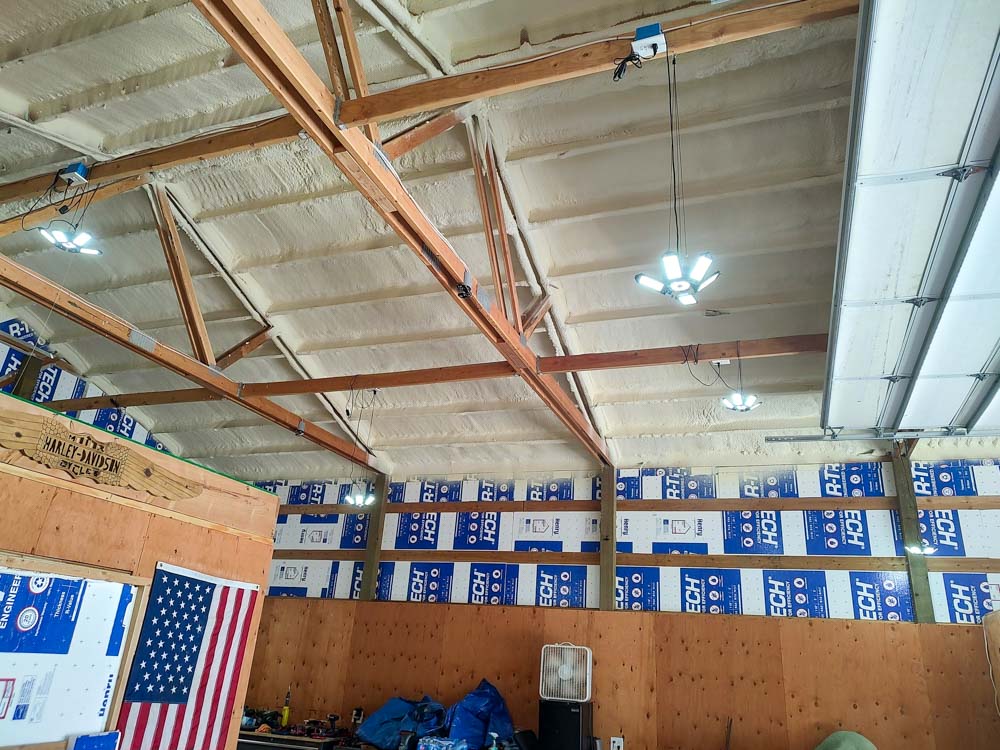
- Roofline, closed-cell, adhered directly to the underside of the panel or deck. This is the core of the job. It stops condensation at the coldest surface and turns the roof into part of the conditioned envelope.
- Walls — closed-cell against the panel, or a hybrid where budget matters and the wall is not the condensation risk the roof is.
- Gable ends and eave details — where most air leakage in a post-frame building lives. These get sealed, not just insulated.
- Overhead door headers and jambs — big thermal holes people forget about, and cheap to address while the crew is on site.
- Under the slab or at the slab edge — only relevant if you are still at the construction stage, but it is the one thing you truly cannot add later.
If your building is still going up, this is worth coordinating with your builder. See our new construction insulation page for how that sequencing works.
How thick, and why
Closed-cell runs roughly R-6 to R-7 per inch, so the math is straightforward — but the driver is usually not the R-value target:
- 2 inches gets you a solid air and vapor barrier and around R-13. Common on unheated or minimally heated storage buildings where the goal is stopping condensation.
- 3 inches lands near R-20 and is a common shop specification when the building is heated regularly.
- More than that when the shop is fully conditioned, when you are running a business out of it, or when you want to keep it comfortable through a smoke-season August as well as January.
A heated shop that is only insulated to storage-building levels will still be expensive to heat. Decide the use case first; the inches follow.
Ignition barriers and code
Foam plastic has to be separated from the building interior by an approved barrier. Broadly:
- In occupied space, that means a 15-minute thermal barrier — typically half-inch gypsum board or an approved equivalent.
- In attics and crawl spaces entered only to service utilities, an ignition barrier may be permitted instead, including approved spray-applied coatings.
- Shops and pole barns fall in different places depending on how the building is classified and used, and local officials interpret this.
This is exactly the kind of thing that should be settled before the foam goes on, not after an inspection. We handle that conversation with your building department as part of the job, and we price the barrier as a line item rather than leaving it as a surprise.
Five expensive mistakes
- Insulating the ceiling only and leaving the walls open. Warm air finds the cold panel anyway. Half an envelope is not half the benefit.
- Adding a heater to an uninsulated metal building. This is how a dry storage barn turns into a building that drips on everything in it.
- Fiberglass against steel. It gets wet, sags, rusts fasteners from the inside and hides the problem until the damage is done.
- Forgetting the doors. An uninsulated overhead door and unsealed jambs can undo a large share of the work above them.
- No plan for the barrier. Finding out after the fact that the foam has to be covered turns a finished job into an unfinished one.
Shops, barns and metal buildings across North Idaho
NW Spray Foam & Insulation is family-owned and owner-operated out of Hayden, and post-frame and metal buildings are a large share of what we do — in Coeur d’Alene, Post Falls, Sandpoint, Harrison and the surrounding area. We will walk the building, ask what you plan to do with it, and spec an assembly that keeps the steel dry and the heat in.
More on commercial and metal building insulation, or request an estimate. Curious what the whole thing costs? Start with our North Idaho cost guide.
Frequently asked questions
What is the best way to insulate a pole barn in Idaho?
Closed-cell spray foam applied directly to the underside of the roof panel or deck, continued down the walls, with attention to gable ends, eaves and overhead door headers. Adhered closed-cell removes the air gap between warm interior air and cold steel, which is what prevents the condensation that soaks conventional insulation in metal buildings.
Why does my metal building drip inside?
Steel panel radiates heat and drops below the temperature of the air inside the building, so moisture in that air condenses on the underside of the panel and falls back down. Heating an uninsulated metal building makes this worse. The fix is an insulation layer adhered directly to the steel so moist air never reaches the cold surface.
How thick should spray foam be in a shop?
Two inches of closed-cell provides a solid air and vapor barrier and roughly R-13, which suits unheated or minimally heated storage. Three inches lands near R-20 and is a common specification for a regularly heated shop. Fully conditioned shops and buildings used for business typically justify more. Decide how the building will be used first, then set the thickness.
Does spray foam in a shop need an ignition barrier?
Foam plastic has to be separated from the interior by an approved barrier, and which barrier applies depends on how the building is classified and used. Occupied space generally requires a 15-minute thermal barrier such as half-inch gypsum board, while attics and crawl spaces entered only to service utilities may allow an approved ignition barrier. Settle this with your building department before the foam is applied.
Need a number for your building?
NW Spray Foam & Insulation is a family-owned, owner-operated crew in Hayden serving Coeur d’Alene, Post Falls, Sandpoint, Harrison and the surrounding North Idaho communities. Tell us what you are building or fixing and we will spec it properly and put it in writing.
Request an estimate Call (208) 818-4170More insulation guides
Cost Guides
How Much Does Spray Foam Insulation Cost in North Idaho?
August 21, 2026 · 8 min read
2026 price ranges for open-cell and closed-cell, what each area of a building typically costs, and how to compare two bids that do not match.
Read the guide →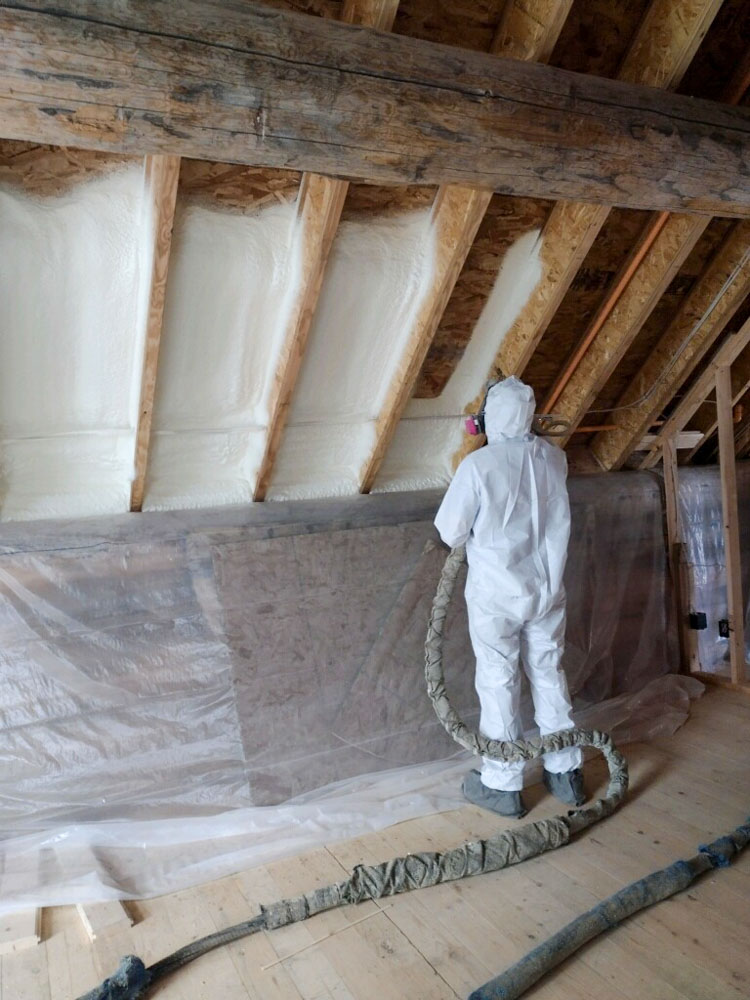
Insulation 101
Closed-Cell vs Open-Cell Spray Foam in a Cold Climate
August 21, 2026 · 7 min read
R-value per inch, vapor permeability and where each foam belongs in a climate that spends months below freezing.
Read the guide →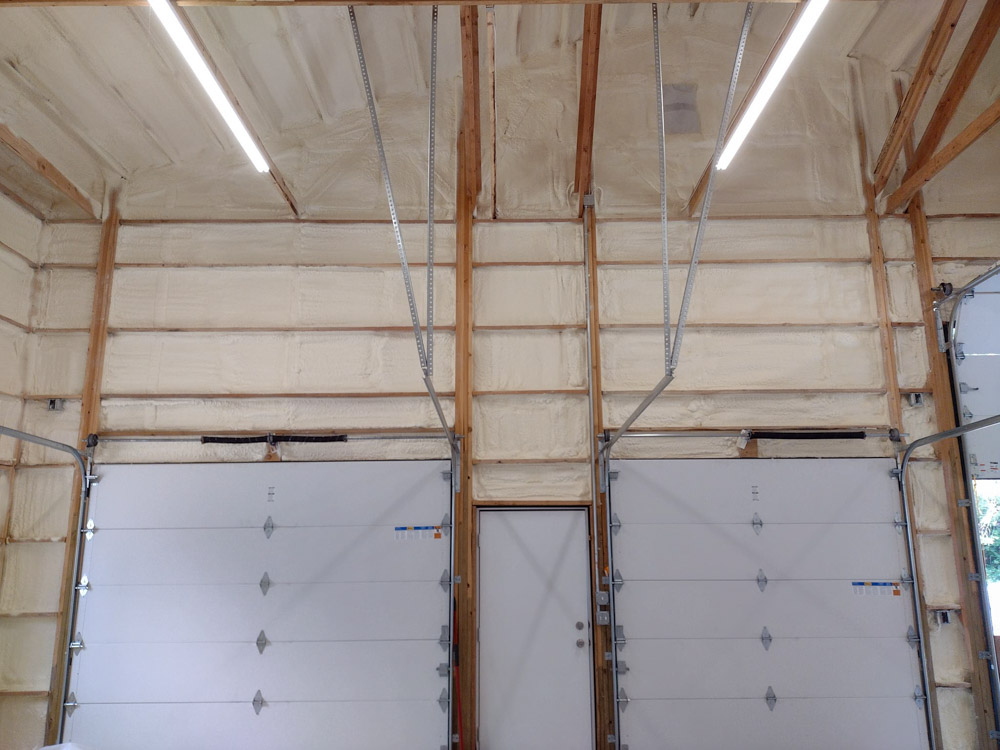
Permits & Code
What R-Values Does North Idaho Code Require?
August 21, 2026 · 7 min read
Climate zone 6 targets for ceilings, walls, floors and crawl spaces, what the Idaho amendments changed, and the air-sealing requirement people forget.
Read the guide →